The 16GB DDR4 PC4-2400T ECC RDIMM is a 16 GB DDR4 ECC server memory module rated at 2400 MT/s, part code PC4-2400T. It works in HPE ProLiant Gen9 / Gen10 servers.
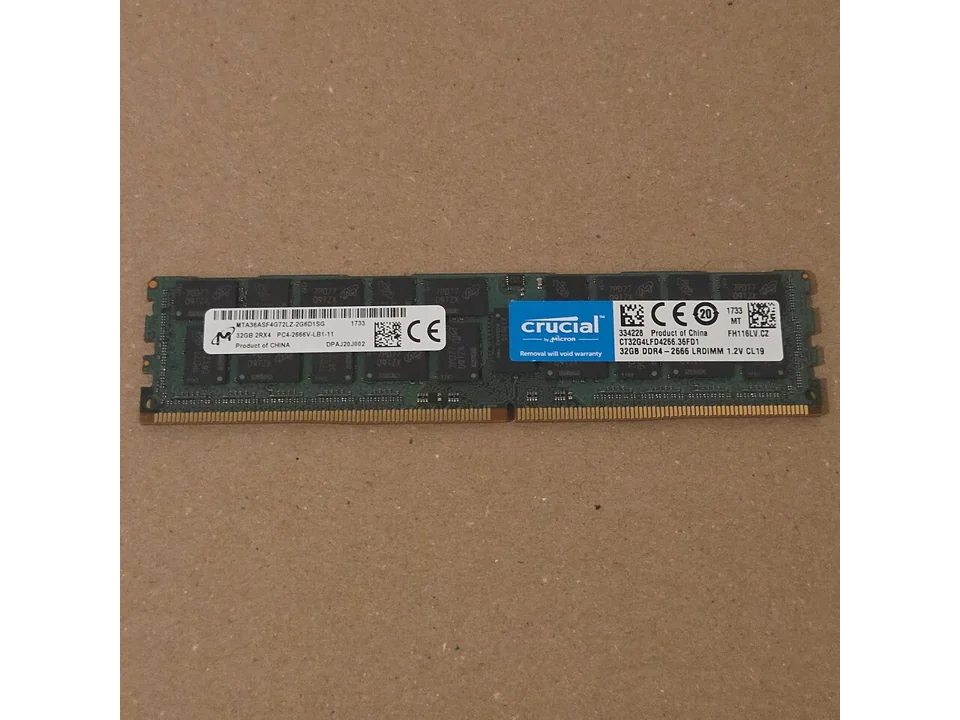
RDIMM is the standard server choice: a registered buffer, lower latency than LRDIMM and full ECC support.
ECC means a single-bit memory error is corrected before it ever reaches your application. On a workstation that is a nice extra; on a server that runs for months without a reboot it is the difference between “a bit flipped” and “the database is corrupt”.
One configuration detail that is often missed: populate channel by channel, not slot by slot. Six modules across three channels are considerably faster than six modules on one channel — the correct order is in the server model’s own memory-population guide. Also, if you mix modules of different speeds they all run at the speed of the slowest one.
Applications, trade-offs and selection guide
Capacity before frequency
Budget memory for VMs and the host, then reserve growth capacity. Databases depend on the active dataset and cache. Adding capacity to a system that swaps can be more useful than a faster memory bin; the actual benefit depends on workload.
ECC alone is not enough
DDR3, DDR4 and DDR5 are not directly interchangeable. RDIMM, LRDIMM and UDIMM are distinct. Check allowed combinations, capacity, ranks and channel population for the exact server. Even identical modules must follow its population rules.
Read the part number as well as capacity
Equal capacity and speed can hide different module types, ranks or chip organizations. Supply the current module label, part number and CPU model. Operating speed also depends on CPU support and slot population.
Schematic identifying the component class; not a stock-unit photograph.